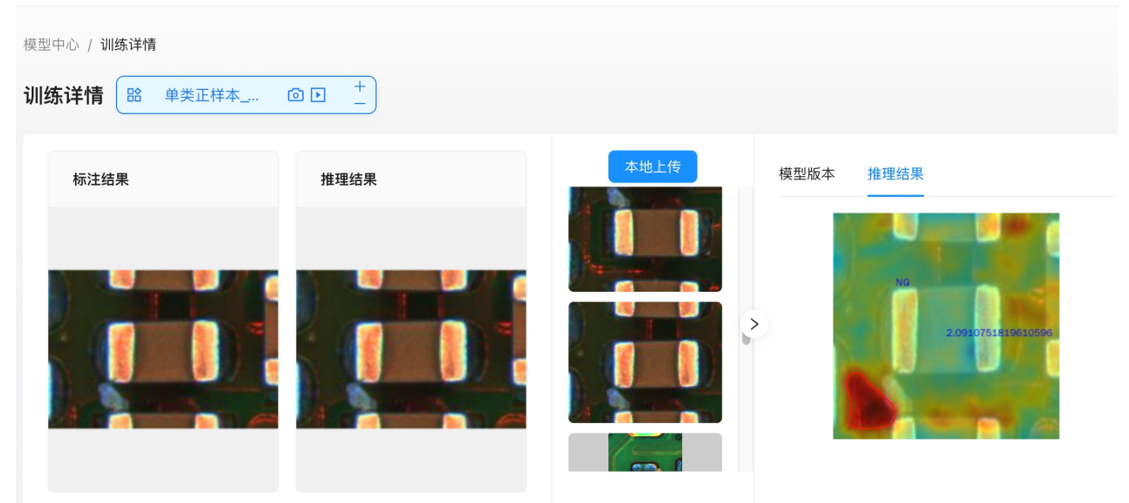
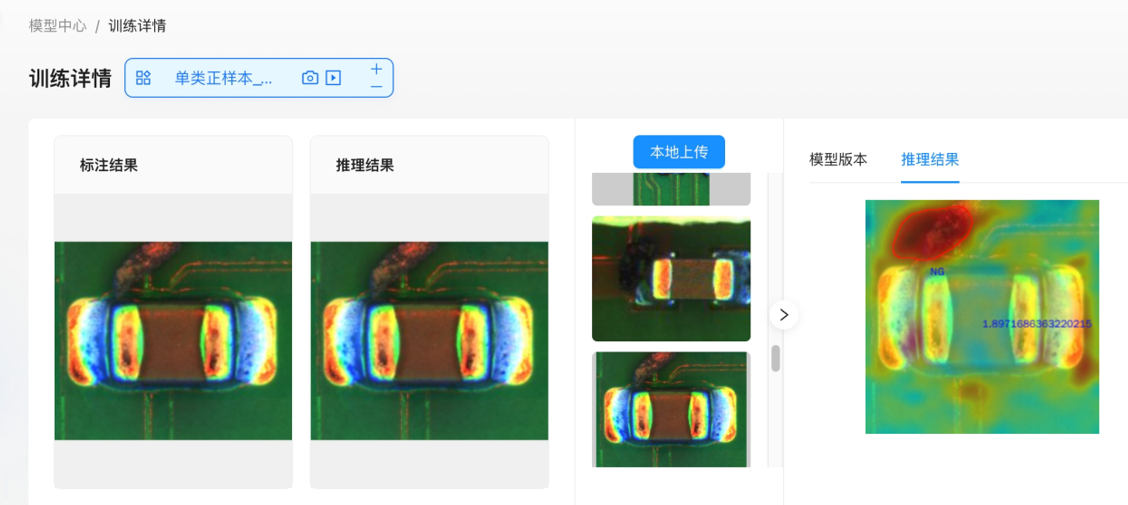
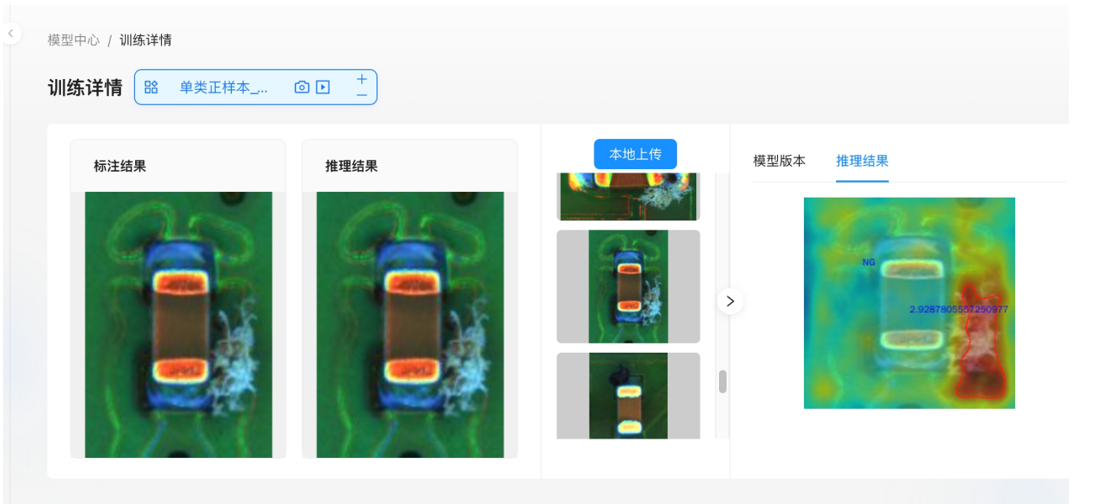
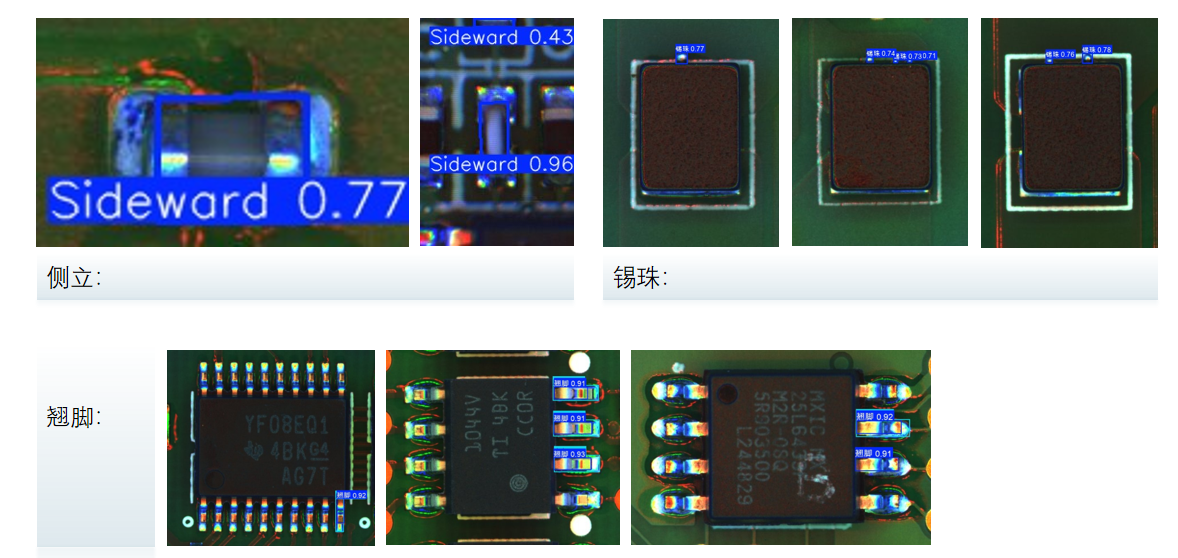
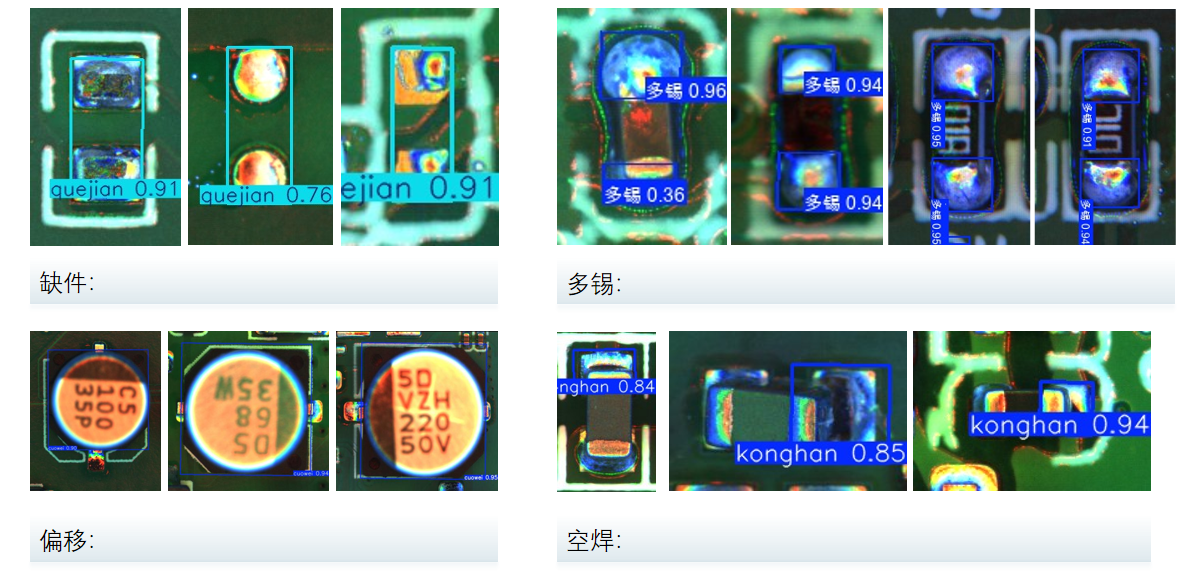
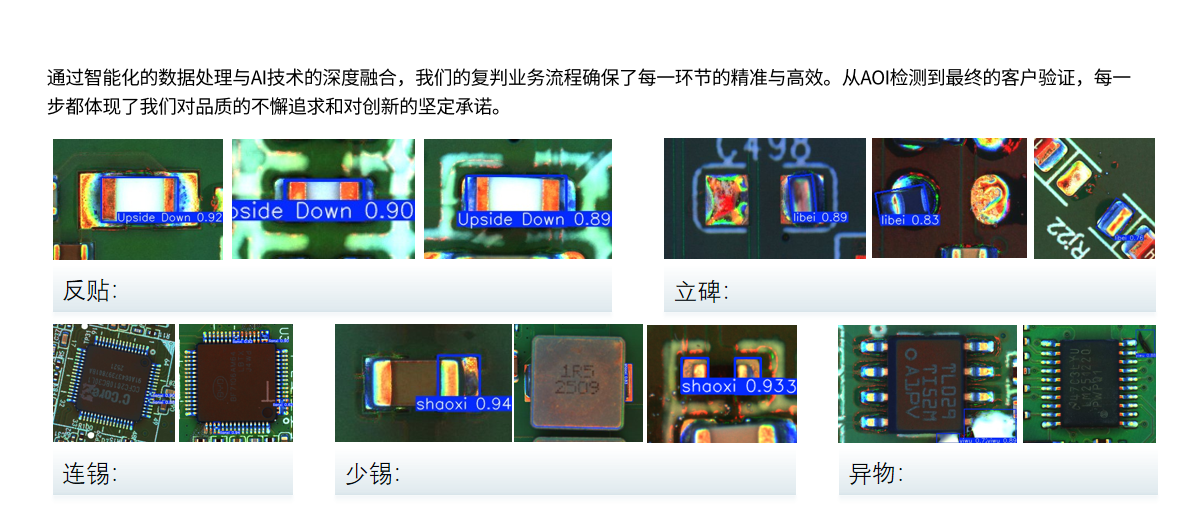
The self-learning model is capable of generalizing new defects and accurately identifying tiny or irregular flaws (e.g., reverse pasting, solder bridging, pin warping, etc.). The efficiency of AI re-judgment has been doubled, thus putting an end to manual misjudgment and missed inspections.
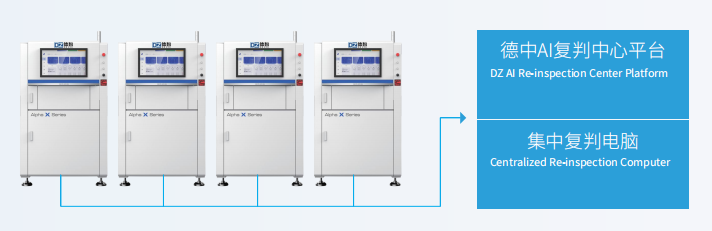
With cross-production line model sharing, a single system can cover the detection needs of the entire plant. It unifies re-judgment standards and decision-making logic, breaks down data silos, and enables centralized operation and maintenance deployment.
It supports multi-template switching and an industrial-grade shortcut key system, and is compatible with both batch re-judgment and detailed review. The customizable interface can adapt to the habits of different production lines, facilitating the quick positioning of high-priority defects.
The training-inference decoupling mechanism ensures that the continuous training of new models will not affect online detection. It also supports version comparison and rollback, allowing for easy adaptation to changes in production line processes.
It integrates data throughout the entire processes of collection, annotation, training, and inference to drive the self-optimization of the model. As a result, the detection accuracy and robustness are continuously improved, and it boasts strong resistance to light interference.
This AI re-judgment software can be quickly deployed, saving more than 50% of manpower.
It supports connection with AOI systems and MES systems, and is compatible with manufacturing scenarios in multiple industries such as semiconductors, panels, and optoelectronics. It can efficiently adapt to both small-batch orders and large-scale production lines.
 粤ICP备2025434628号
 粤公网安备44030002010933号