
Automated Optical Inspection (AOI) systems are essential for maintaining quality in the production of printed circuit boards. As technology advances, the need for more precise and efficient inspection methods has led to the development of both 2D and 3D AOI systems. This article explores the differences between 2D and 3D AOI, their respective advantages and limitations, and their roles in modern manufacturing.
What is 2D AOI?
2D AOI is a technology used to inspect the surface of PCBs using high-resolution cameras. It captures images of the PCB and compares them to a predefined template to detect defects. This method focuses on surface-level inspections, ensuring that components are correctly placed and soldered. Learn more about our 2D AOI machines.

2D AOI Advantages and Limitations
Advantages:
- Mature technology
- Cost-effective
- High speed
- Less susceptible to shadowing issues
- Able to inspect tall devices > 5mm
- Flexible inspection capabilities
Limitations:
- Inability to Inspect Hidden Solder Joints
- Can’t Provide Volumetric Measurement Data
- Less Effective for Complex and Small Components
- higher false call rate
What is 3D AOI?
3D AOI builds upon the capabilities of 2D AOI by adding depth measurement. It uses multiple cameras and light sources to create a three-dimensional image of the PCB, allowing for a more comprehensive inspection. This technology can measure the height of components and detect defects that are not visible with 2D inspection. Learn more about our 3D AOI machines.
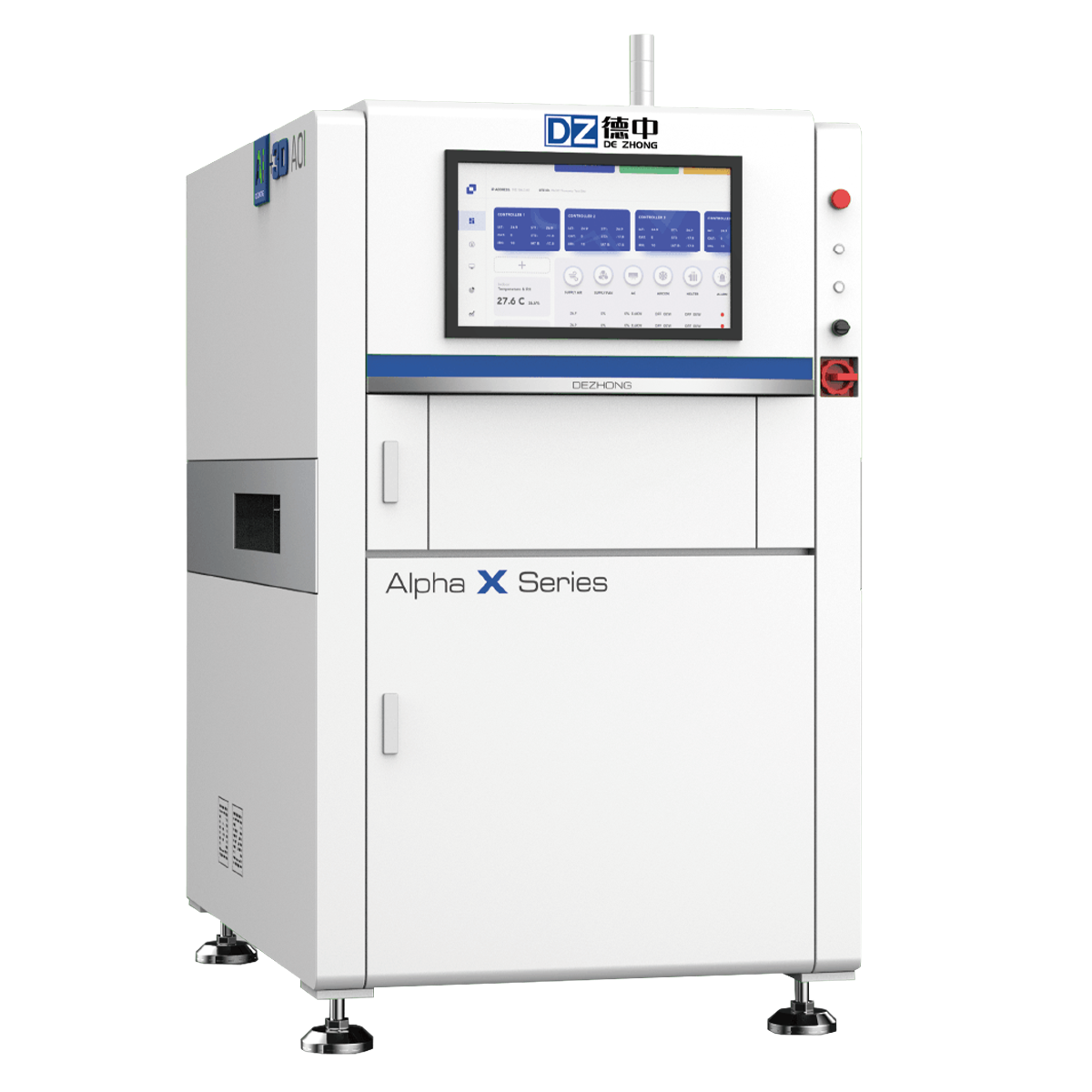
Advantages:
- Comprehensive Defect Detection
- Accurate Height Measurement
- Lower False Call Rate
- Enhanced Inspection Capabilities
Limitations:
- Higher Cost
- Lower Throughput
- Susceptibility to Shadowing Issues
Differences Between 2D and 3D AOI
Types of Defects Detected
2D AOI systems are effective for identifying surface-level defects such as missing wires and incorrect components. They utilize high-resolution cameras to capture detailed images of the PCB surface, enabling the detection of visible issues. In contrast, 3D AOI systems can detect more complex defects, including problems with hidden integrated circuits (ICs) and solder joints. By measuring height dimensions and providing a three-dimensional view, 3D AOI offers a more comprehensive inspection capability.
Height Measurement
One of the key limitations of 2D AOI is its inability to measure height dimensions. It is restricted to surface inspections, which limits its effectiveness in detecting certain types of defects. On the other hand, 3D AOI systems include height measurement capabilities, allowing for more precise detection of defects and ensuring accurate component placement. This ability to capture depth information is crucial for identifying issues that are not visible in a 2D inspection.
Limitations
2D AOI systems cannot inspect hidden solder joints, measure connectors, or optimize defect rates effectively. They are limited to inspecting visible components and detecting simple defects. In contrast, 3D AOI systems overcome these limitations by providing comprehensive inspections that include hidden components and more complex defects. This makes 3D AOI suitable for a wider range of inspection tasks and more reliable in ensuring product quality.
Rate of Defect Detection
The rate of defect detection is another significant difference between the two systems. 2D AOI systems are generally slower and less efficient due to their reliance on surface-level inspections and simpler algorithms. Conversely, 3D AOI systems are faster and more efficient, utilizing advanced algorithms to improve defect detection rates and overall inspection speed. This efficiency is critical in high-volume manufacturing environments where speed and accuracy are essential.
Results Reliability
The reliability of inspection results also varies between the two systems. 2D AOI systems are less reliable for detecting complex defects due to their limitations in height measurement and hidden component inspection. In comparison, 3D AOI systems are more reliable, with ongoing advancements reducing costs and improving speed and accuracy. This makes 3D AOI a preferred choice for modern manufacturing, where high reliability is essential.
 粤ICP备2025434628号
 粤公网安备44030002010933号